


BY TAIBAT UMMI YAKUBU
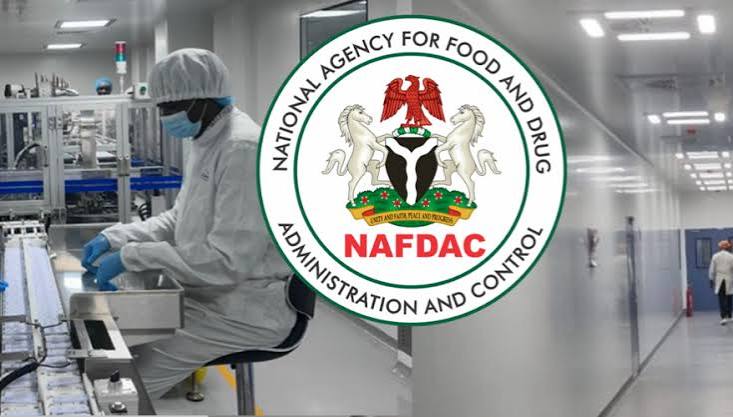
Nigeria may be moving closer to reviving its vaccine manufacturing capacity as the National Agency for Food and Drug Administration and Control (NAFDAC) steps up efforts to attract international support for local production.
NAFDAC Director-General, Prof. Mojisola Adeyeye, has called on international development partners and other stakeholders to support the establishment of vaccine manufacturing facilities in Nigeria, particularly through the development of fill-and-finish modular plants.
Adeyeye made the appeal in Lagos while speaking at the 8th Nigeria Pharma Manufacturers Expo, organised by the Pharmaceutical Manufacturers Group of the Manufacturers Association of Nigeria (PMG-MAN) in partnership with PGE Expo PVT Limited.
She said international partners had played a major role in strengthening NAFDAC's regulatory capacity over the years and urged them to extend that support to the country's ambition of producing vaccines locally.
According to the NAFDAC chief, Nigeria has already achieved eight of the nine functions required under the benchmarking framework for medicines and vaccines, putting the country in a stronger position to pursue Vaccine Lot Release Maturity Level Four.
Adeyeye said the remaining gap was largely connected to domestic vaccine manufacturing, stressing that the country could regain a capability it once possessed.
She recalled that NAFDAC had previously been involved in vaccine production and argued that the time had come for Nigeria to rebuild that capacity rather than remain heavily dependent on imported vaccines.
The agency's director-general expressed confidence that the financial requirements for achieving the next level of vaccine regulatory maturity would be manageable, saying NAFDAC had already mapped out the likely costs and processes involved.
The push for local manufacturing is also coming against the backdrop of broader efforts by the Federal Government to make Nigeria's pharmaceutical sector more competitive and reduce dependence on imported medicines and health products.
Adeyeye credited President Bola Tinubu's 2024 Executive Order with providing fresh momentum for incentives aimed at strengthening domestic pharmaceutical manufacturing.

She said the Coordinating Minister of Health and Social Welfare and the Minister of State for Health had also supported the push for incentives, helping to advance initiatives designed to unlock more value across the pharmaceutical supply chain.
NAFDAC's regulatory reforms, she explained, have included a Good Manufacturing Practice Roadmap under which agency inspectors carried out compliance assessments of more than 165 pharmaceutical companies across Nigeria over an eight-month period.
The programme, supported by the United States Agency for International Development (USAID) and implemented by the United States Pharmacopeia, was aimed at helping manufacturers meet quality standards and improve the reliability of medicines reaching patients.
Adeyeye also pointed to what she described as a significant shift in the country's pharmaceutical import landscape. She said imports covered under the “Five Plus Five” and Ceiling Initiative fell by 70 per cent between 2021 and 2025 as local manufacturers increasingly took up production opportunities.
She further highlighted improvements in NAFDAC's technical capacity, laboratory recognition and regulatory performance, noting that the agency had successfully undergone re-benchmarking and became the first regulatory agency in sub-Saharan Africa to achieve the feat again.
For pharmaceutical manufacturers, however, the industry's ability to become self-sufficient will depend not only on regulation but also on policies that encourage long-term investment.
Chairman of PMG-MAN, Oluwatosin Jolayemi, urged the Federal Government to extend the 2024 Executive Order beyond its current March 2027 expiration date, arguing that manufacturers need policy stability to make major investments in production capacity.
Jolayemi said achieving medicine security and pharmaceutical sovereignty would require more than temporary interventions, stressing the importance of consistent policies, investment, technical capacity and a predictable business environment.
The expo brought together pharmaceutical manufacturers, regulators, investors and development partners, with 132 companies from different countries participating.
As Nigeria continues to grapple with the vulnerability created by dependence on imported medicines and vaccines, the renewed push by NAFDAC signals an attempt to move the country from simply regulating pharmaceutical products to building the industrial capacity to produce more of them at home.
The bigger test now lies in whether international support, government incentives and private-sector investment can be converted into functioning vaccine plants and a sustainable domestic manufacturing ecosystem.



Comments (0)
No comments yet. Be the first to share your thoughts!