


by Taibat Ummi Yakubu
President Bola Ahmed Tinubu’s ambitious pledge to end Nigeria’s long-standing culture of overlapping budgets has encountered a fresh hurdle after the Federal Government extended the lifespan of the 2025 Appropriation Act to December 31, 2026, raising new questions about the country’s ability to maintain a predictable fiscal calendar.
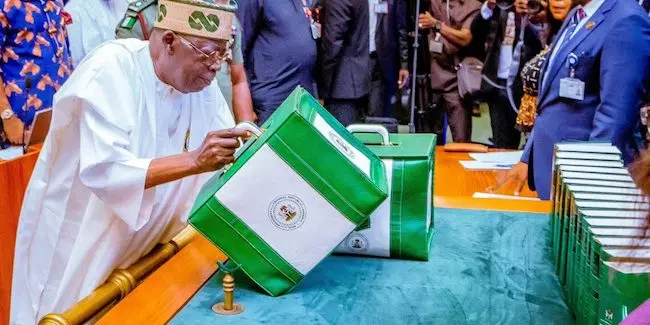
When presenting the 2026 budget in December 2025, Tinubu had promised a major shift in fiscal management, declaring that Nigeria would no longer operate multiple budgets from a single stream of revenue. The President assured Nigerians that all outstanding capital liabilities from previous years would be settled by March 31, 2026, paving the way for a clean, single-budget cycle beginning in April. The declaration was widely viewed as a bold attempt to address a problem that has burdened public finance management for decades.
However, nearly a year later, the reality appears more complicated. On September 30, Tinubu signed the Appropriation (Amendment) (No. 4) Bill, 2025, extending the implementation period of the budget by another three months. According to the Presidency, the extension is intended to give Ministries, Departments and Agencies (MDAs) sufficient time to complete ongoing capital projects and ensure that already appropriated funds are fully utilised rather than left idle.
The decision means the 2025 budget will remain active until the end of 2026, well beyond the timeline earlier announced by the President. It also represents another adjustment to the implementation schedule, following an earlier extension granted to the capital component of the same budget. While government officials insist the move is necessary to safeguard public investments and prevent project abandonment, it has reignited concerns about whether Nigeria can finally break free from a cycle of budget rollovers that has repeatedly disrupted planning and execution.
Nigeria’s budget implementation challenges did not begin with the current administration. Since the return to democratic rule in 1999, successive governments have struggled to maintain a stable budget calendar. Despite reforms introduced during former President Olusegun Obasanjo’s administration to strengthen fiscal planning, delays persisted under later administrations. Budgets under Presidents Umaru Musa Yar’Adua and Goodluck Jonathan were often signed months into the fiscal year, undermining effective implementation and creating uncertainty for government agencies and contractors.

The situation prompted frequent blame games between the Executive and the National Assembly, with both sides accusing each other of causing delays. A World Bank assessment later found that between 2015 and 2019, federal budgets were enacted an average of five months late, highlighting persistent weaknesses in budget predictability and fiscal discipline.
Although the Buhari administration recorded notable progress by restoring the January-to-December budget cycle from 2020, unforeseen events such as the COVID-19 pandemic disrupted implementation and forced the government to extend parts of the budget into the following year. The experience underscored the fact that budget discipline depends not only on political commitments but also on factors such as revenue performance, procurement processes, project readiness and administrative capacity.
Economic experts argue that prolonged budget extensions carry broader implications for investment and economic planning. Analysts have repeatedly warned that recurring rollovers weaken confidence because businesses, contractors and investors cannot accurately predict when government-funded projects will receive financing. Others maintain that overlapping budgets make it difficult to measure economic performance within clearly defined fiscal periods, complicating planning and accountability.
Economist Dr Muhammad-Bashir Yusuf noted that while restoring the January-to-December budget cycle remains important, abruptly ending overlapping appropriations could jeopardise projects already approved and awaiting completion. He argued that a gradual transition would be more practical than cancelling or compressing an entire fiscal year simply to meet a target date.
For now, the Federal Government insists the extension is a pragmatic decision aimed at ensuring ongoing projects are completed and public funds are not wasted. Yet the move also highlights the gap between policy ambitions and implementation realities. While the administration may not have abandoned its goal of establishing a single budget and revenue cycle, the timetable originally announced by the President has clearly slipped.
As December 31, 2026 approaches, attention will increasingly focus on whether the latest deadline marks the beginning of a lasting fiscal reset or merely another chapter in Nigeria’s long struggle to maintain budget discipline. More than an administrative milestone, the date has become a critical test of the government’s promise to finally end the era of overlapping budgets and place public finances on a more predictable path.

Comments (0)
No comments yet. Be the first to share your thoughts!