


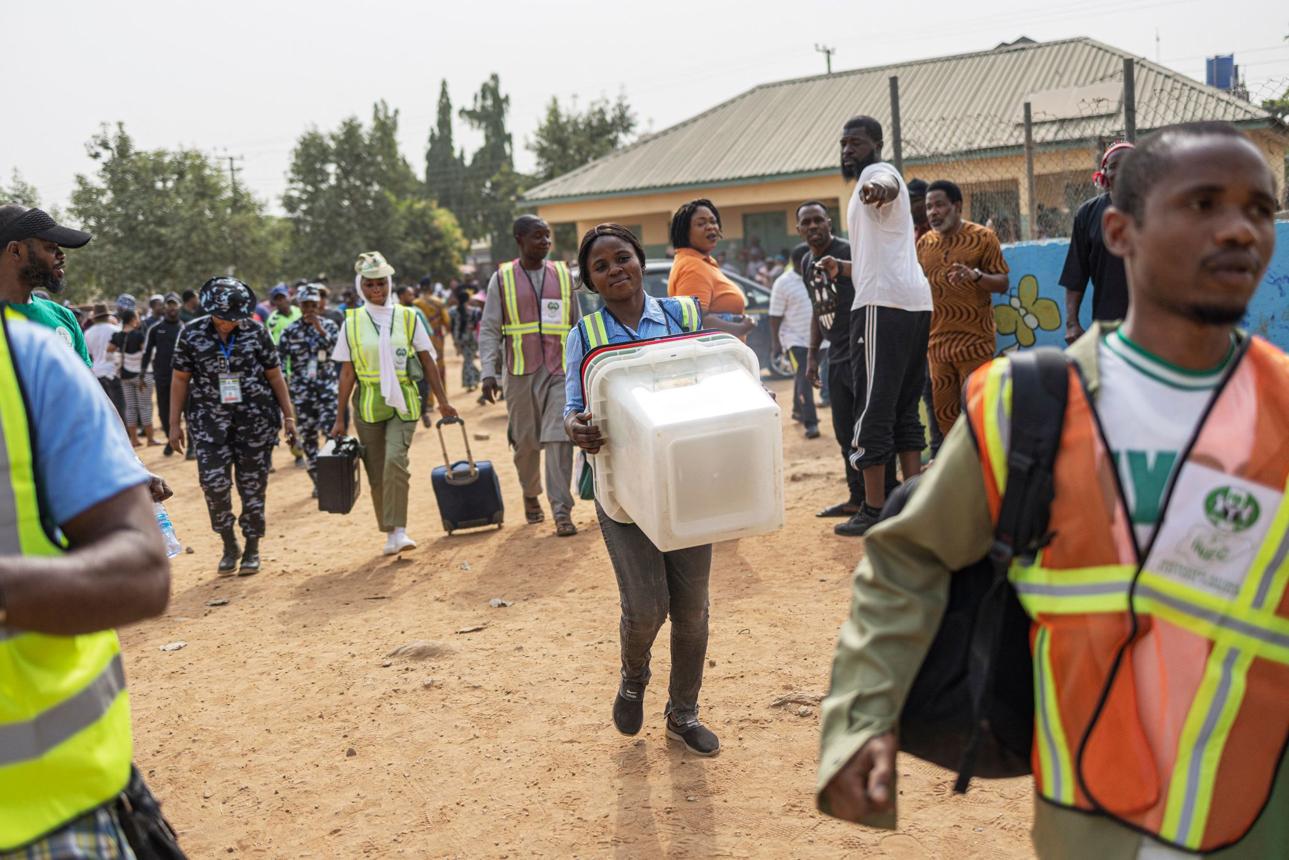
The Independent National Electoral Commission (INEC) has raised concerns over the financial demands of the 2027 general elections, warning that inadequate funding could affect the deployment of electoral materials, personnel and security required for the polls.
INEC Chairman, Prof. Joash Amupitan, gave the warning on Wednesday in Owerri, Imo State, while addressing the sixth Conference and Retreat for Senior Police Officers, where security agencies and other stakeholders discussed preparations for the 2027 elections.
Amupitan said election security cannot be separated from logistics, noting that a peaceful environment alone would not guarantee the successful conduct of an election if electoral materials and personnel failed to reach polling locations on time.
“If an election is peaceful and the logistics are not in place, there is no election coming because the police have done its job as the lead agency of security. But if the logistics are still not in place, it can be a threat to security,” he said.
The INEC chairman explained that the commission's financial responsibilities extend far beyond election-day activities. The commission conducts presidential, National Assembly, governorship and State House of Assembly elections, while also handling voter registration and political party registration.
Although INEC's funding is provided as a first-line charge on the Consolidated Revenue Fund, Amupitan said the scale of its responsibilities makes sustained financial support necessary.
“Sometimes, it is not what you would like to do that you are able to do because of financial constraints,” he said, noting that government agencies, including INEC and the police, work within the resources allocated through the budgetary process.
He said election expenditure should be viewed as a national responsibility because the electoral process covers the three tiers of government. Adequate funding, he added, is particularly important for moving sensitive and non-sensitive materials, deploying personnel and maintaining operations across local government areas, wards, registration areas and polling units.
Amupitan also identified voter registration as a critical component of the electoral process, saying an inaccurate or outdated voters' register could affect the inclusiveness of elections.

The chairman said INEC was therefore treating logistics and security as key areas of its preparations for 2027 and was engaging the government and security agencies to address operational challenges before the polls.
He also highlighted the Inter-Agency Consultative Committee on Election Security (ICCES), describing it as an important mechanism for bringing INEC and security agencies together to coordinate election security.
According to Amupitan, ICCES emerged from arrangements put in place after the 2011 general elections amid concerns over post-election violence. It has since developed into a coordination structure operating at federal, state and local government levels.
He said the Inspector-General of Police participates at the national level, commissioners of police operate at the state level, while police leadership is represented at the local government level.
Amupitan further called for stronger intelligence gathering and closer cooperation among security agencies, saying lessons from recent off-cycle elections should inform preparations for the 2027 general elections.
He acknowledged that Nigerians expect an electoral system capable of meeting high standards but stressed that achieving that objective requires adequate resources.
“In Nigeria, we want the best. We want our electoral system to be 100 per cent. But sometimes we don’t ask ourselves the question: if we want the nation to be perfect, there must be a cost for it,” he said.
The INEC chairman urged the relevant authorities to ensure that the commission and security agencies have the resources required to perform their respective responsibilities, while expressing hope that the Owerri conference would produce a practical roadmap for election security ahead of the 2027 polls.
.jpg)

Comments (0)
No comments yet. Be the first to share your thoughts!