


The Nigerian oil and gas industry cannot achieve sustainable growth without stable regulations, strong labour relations and closer cooperation among government, regulators, operators and workers, the Nigerian Midstream and Downstream Petroleum Regulatory Authority (NMDPRA) and the Petroleum and Natural Gas Senior Staff Association of Nigeria (PENGASSAN) have said.
The two organisations made the call in Abuja at the 5th PENGASSAN Energy and Labour Summit, where industry stakeholders stressed the need to create a regulatory environment capable of attracting long-term investment while protecting workers, consumers and the wider economy.
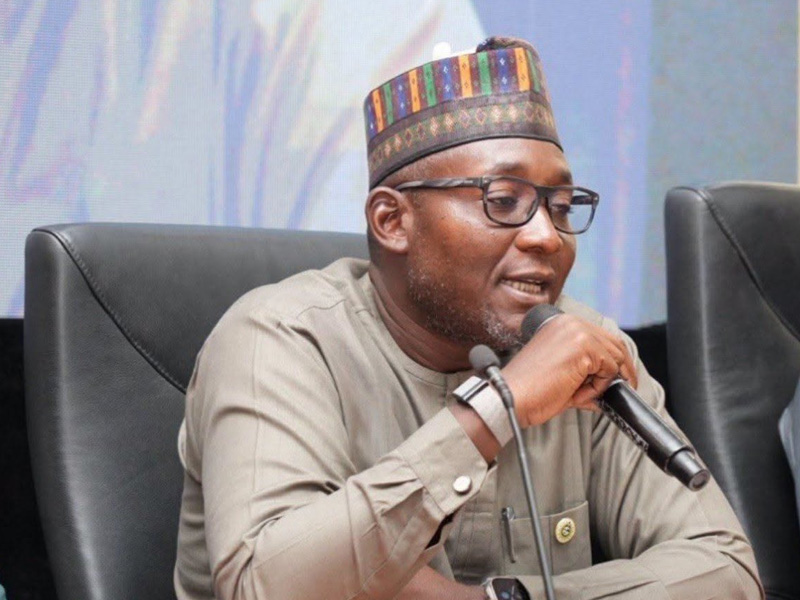
The Chief Executive of NMDPRA, Rabiu Umar, represented at the event by the agency’s Executive Director, Corporate Services and Administration, Bashir Sadiq, said the regulator was committed to enforcing industry standards while ensuring that its decisions remained transparent, fair and predictable.
Umar said Nigeria needed regulation that would not only punish non-compliance but also create room for investment, innovation and expansion across the petroleum value chain.
He outlined three principles that, according to him, would guide the regulator: firmness, fairness and impartiality.
“We want to be firm in our regulation, we want to be fair in our conduct, and we want to be impartial in our institutions,” he said.
According to him, firmness means upholding established rules and enforcing standards, particularly those relating to safety and market integrity. Fairness, he added, requires the regulator to listen to stakeholders and apply its rules consistently, while impartiality demands that regulatory decisions remain transparent, objective and free from arbitrary changes.
But Umar made it clear that strict regulation should not become unnecessary bureaucracy.
He warned that prolonged delays in regulatory decisions could create uncertainty for investors, raise the cost of doing business and ultimately discourage future investment in the sector.
“Firmness does not mean inflexibility. Fair does not mean we are weak. And fast does not mean we are taking great risks,” he said.
For the NMDPRA boss, the real measure of effective regulation should be the progress recorded by the industry.
He questioned how much Nigeria's refining, gas processing, storage, transportation and distribution capacity was expanding and whether consumers were actually benefiting from regulatory policies.
The argument comes at a crucial time for Nigeria's petroleum sector, where billions of dollars are required to develop refineries, gas processing facilities, pipelines, depots, storage infrastructure and other critical assets.
Umar said regulators must understand the scale and long-term nature of such investments and provide a level of certainty that allows investors to commit capital with confidence.
He also linked the expansion of petroleum infrastructure to broader economic development, arguing that increased refining capacity and gas processing would strengthen Nigeria's energy security, create jobs and stimulate industrial growth.
According to him, developing the country's gas infrastructure could trigger the emergence and expansion of industries such as fertiliser production and gas-fired power generation.
The NMDPRA chief also emphasised the importance of workplace safety, describing the protection of workers as a non-negotiable responsibility for the industry.
“At the end of the day, whatever we do, we want to make sure that members of our staff go back to their families safe and in good health,” he said.
Beyond regulation and infrastructure, Umar said Nigeria must pay greater attention to the people driving the industry.
He described the oil and gas workforce as one of the sector's most important pillars, warning that the future of the industry would depend heavily on the skills, experience and adaptability of its workers.
With technology, energy markets and investment models rapidly changing, he called for deliberate investment in training, skills development and professional growth.
He also acknowledged the contribution of PENGASSAN members, noting that much of the industry's experience and technical capacity had been built through years of training and hands-on work by the union's members.
PENGASSAN: Government, Regulators, Operators Must Work Together
Speaking at the summit, PENGASSAN President, Festus Osifo, said Nigeria could not transform its oil and gas industry if key stakeholders continued to operate in isolation.
He called for a stronger partnership involving government, regulators, oil and gas companies and organised labour.
“Where we are today, to a greater stage tomorrow, there must be collaboration between government, between regulators, between the operators and the labour,” Osifo said.
According to him, such cooperation is essential for maintaining stability and preventing avoidable disputes across the sector.
He argued that government could not successfully manage the industry alone, just as operators and labour could not achieve sustainable progress independently.
“If government decides to do it alone, there are always challenges. And if the operators decide to do it alone, there will be free shops. Labour cannot also do it alone,” he said.
Osifo explained that workers depend on companies for employment, while companies also need government policies, regulation and training programmes to remain productive.
He warned that ignoring any of the major stakeholders could create instability and undermine efforts to grow the industry.
PENGASSAN Moves to Protect Jobs Amid Divestment
The union president also disclosed that PENGASSAN had developed a framework to address the growing issue of divestment in Nigeria's oil and gas industry.
The objective, he said, was to ensure that changes in ownership and the exit of international oil companies do not automatically translate into massive job losses or instability.
The issue is particularly important as the sector undergoes structural changes, with companies reassessing their investments and ownership positions in Nigeria.
Osifo said labour must be part of the conversation whenever major investment or divestment decisions are being considered, stressing that the transition should be managed in a way that protects workers and preserves industrial harmony.
The message from both NMDPRA and PENGASSAN was clear: Nigeria's oil and gas industry needs more than increased production to thrive.
It needs predictable regulation, faster decision-making, safer workplaces, skilled workers, stronger infrastructure and genuine cooperation among all stakeholders.
For a sector that remains critical to Nigeria's energy security, government revenue and industrial ambitions, stakeholders at the summit agreed that regulatory stability and industrial harmony can no longer be treated as side issues. They are becoming central to whether the industry can attract the investment and create the jobs needed to power Nigeria's next phase of economic growth.
Comments (0)
No comments yet. Be the first to share your thoughts!