


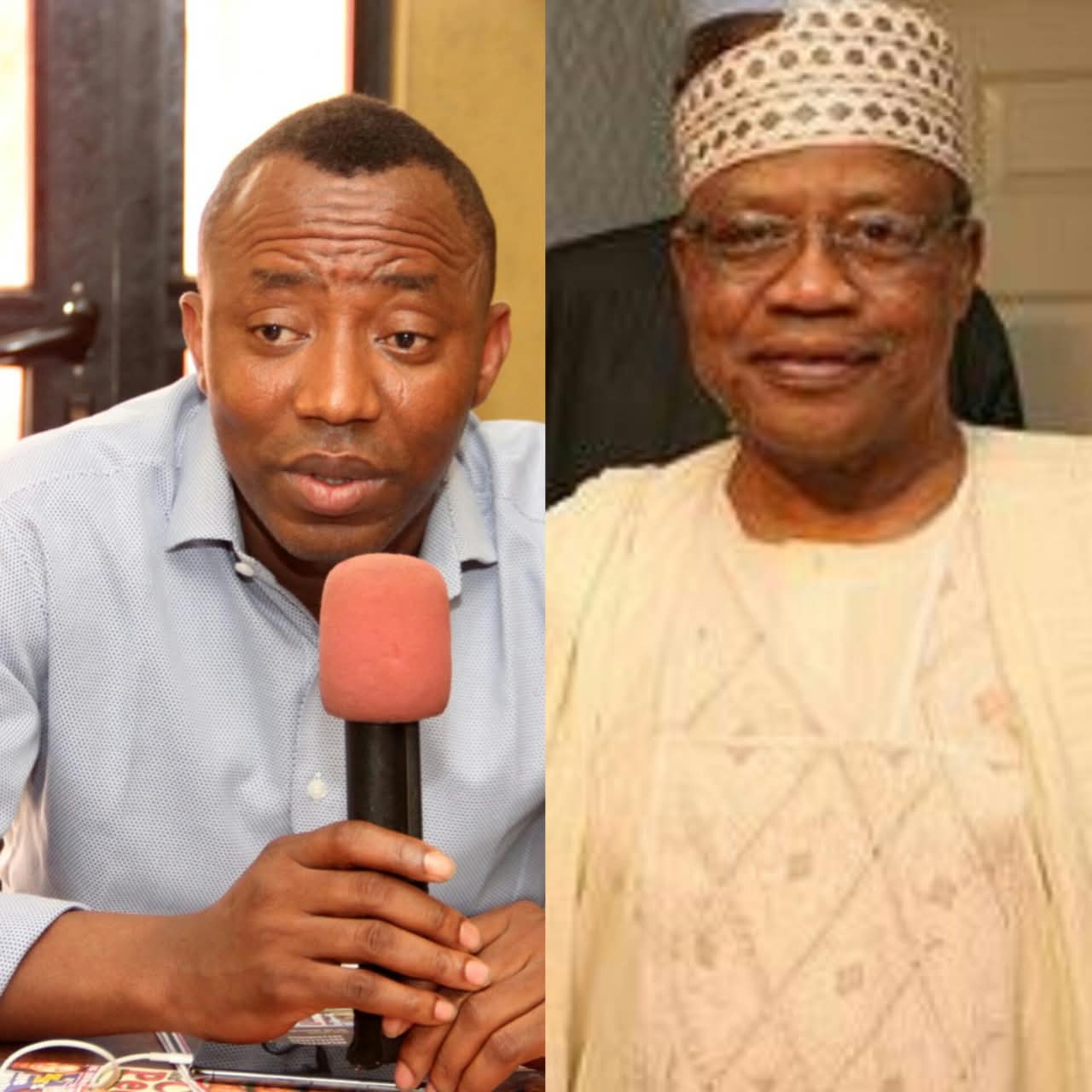
A fresh war of words has erupted between former presidential candidate and activist Omoyele Sowore and Labour Party chieftain Yusuf Datti Baba-Ahmed, with Sowore fiercely defending his criticism of former military ruler Ibrahim Badamasi Babangida and insisting that age should not shield public figures from accountability.
The clash, which has reignited discussions about Babangida's controversial years in power, followed comments by Baba-Ahmed questioning Sowore's criticism of the former military leader as he marked his 85th birthday.
In a strongly worded statement titled “My Response To Mallam Yusuf Datti Baba-Ahmed Over My Comments On Ex-Nigerian Military Dictator Ibrahim Badamosi Babangida At 85: Compassion Does Not Require Historical Amnesia,” Sowore argued that Nigerians have every right to scrutinise Babangida's legacy, regardless of his age or current health status.
While clarifying that he harbours no personal ill will toward the former Head of State, Sowore maintained that compassion should not come at the cost of historical truth.
According to him, public figures who wielded immense power over the nation's affairs must remain open to public examination, especially when their decisions continue to shape the country's political and economic trajectory decades later.
The activist stressed that his position was never about Babangida's age but about the consequences of policies and actions taken during his administration.
He challenged Baba-Ahmed's characterisation of Babangida as a "revered former Nigerian leader," posing a question that has since echoed across political circles: "Revered by whom?"
For Sowore, the issue is not personal respect or disrespect but whether Nigerians are willing to honestly confront their history.
He argued that growing old may earn sympathy and goodwill, but it does not erase the impact of decisions made while in office.
At the centre of his criticism remains the annulment of the June 12, 1993 presidential election—widely regarded as one of the freest and fairest elections in Nigeria's history and one that Babangida himself later acknowledged was won by the late Chief Moshood Kashimawo Olawale (MKO) Abiola.
Sowore described the annulment as a defining moment in Nigeria's democratic journey and insisted that citizens have a duty to continue examining the circumstances surrounding the decision and its far-reaching consequences.
He argued that democracy is built on respect for the people's mandate and that any action undermining that principle deserves continued public scrutiny.
Beyond June 12, Sowore broadened his criticism to what he described as a culture of excessive reverence for political leaders in Nigeria.
He faulted the tendency to place elected officials and former rulers on pedestals through honorific titles and unquestioning loyalty, saying public office holders should be viewed primarily as servants of the people rather than untouchable figures.

According to him, titles such as "Daddy," "Baba," "Leader," and "Your Excellency" have contributed to a political culture that discourages accountability and shields leaders from criticism.
Sowore further dismissed suggestions that his stance was driven by hatred, insisting that his political philosophy has always centred on institutional reform, accountability and the strengthening of democratic structures.
He said his focus remains on systems of governance rather than individual personalities, stressing that citizens must be free to question those who exercised power over national affairs.
The activist also revisited some of the most contentious episodes associated with Babangida's administration, including the unresolved murder of journalist Dele Giwa, the execution of military officers accused of plotting coups, the implementation of the Structural Adjustment Programme and allegations of corruption that dogged the era.
According to him, these issues remain part of Nigeria's collective memory and should not be erased or softened by the passage of time.
In one of the most pointed sections of his response, Sowore rejected Baba-Ahmed's suggestion that people with his political outlook represent a danger to the country.
Instead, he argued that Nigeria's real challenge lies in a political culture that rewards failure, protects entrenched privilege and discourages dissenting voices.
He maintained that citizens who demand transparency and accountability should not be portrayed as threats but as participants in the democratic process.
The exchange has once again drawn attention to the enduring debate over Babangida's place in Nigeria's history—a legacy that remains deeply divisive more than three decades after he left power.
While some Nigerians remember him for economic reforms, political manoeuvring and influence on national affairs, others continue to associate his tenure with democratic setbacks, controversial policies and unresolved questions that have lingered for years.
As reactions continue to trail the public disagreement, Sowore insists that history must remain open to examination, regardless of how much time has passed.For him, accountability does not expire with age, and neither should the nation's memory.
"Public power carries public responsibility," he argued, maintaining that any individual who once exercised authority over the lives of millions must remain answerable to history.The controversy underscores a broader national conversation about leadership, memory and accountability—one that continues to shape how Nigerians interpret the past while searching for a different future.
.jpg)
Comments (0)
No comments yet. Be the first to share your thoughts!