


Nigeria has challenged China and its African partners to rethink the future of health cooperation, arguing that the continent's healthcare challenges will not be solved by importing medical equipment alone.
Instead, the Federal Government says Africa needs stronger institutions, better-trained health workers, technology transfer and local manufacturing if it is to build resilient healthcare systems capable of meeting growing demands.
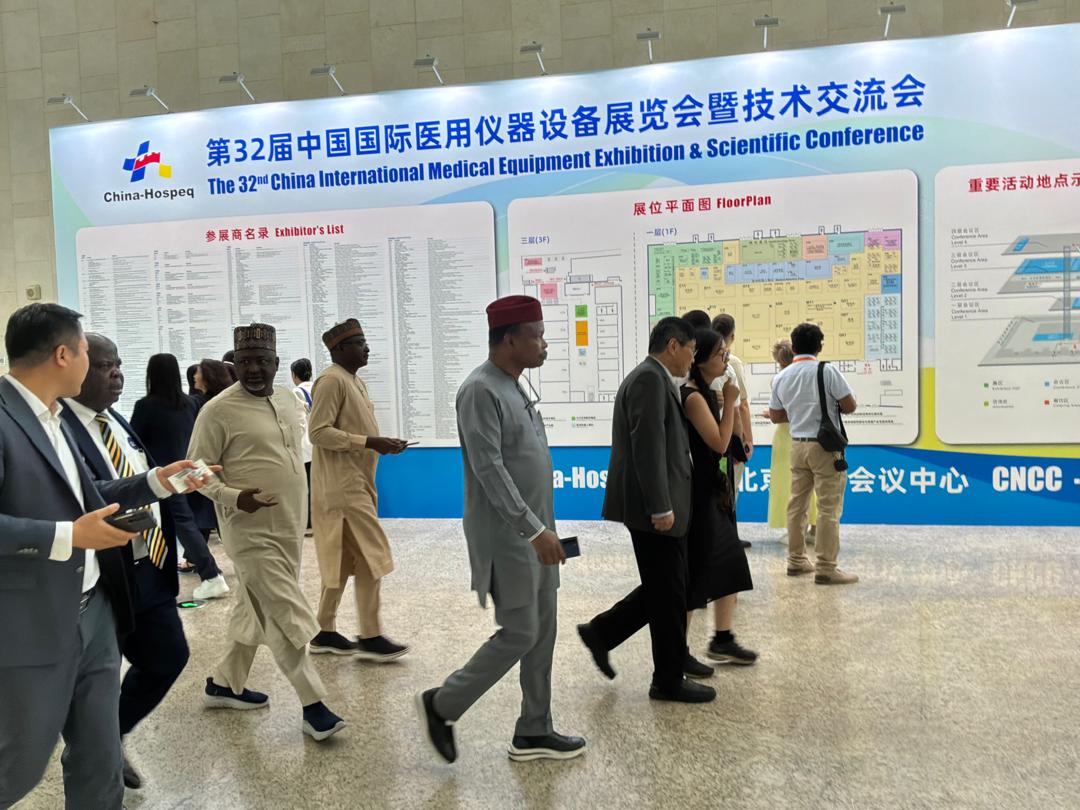
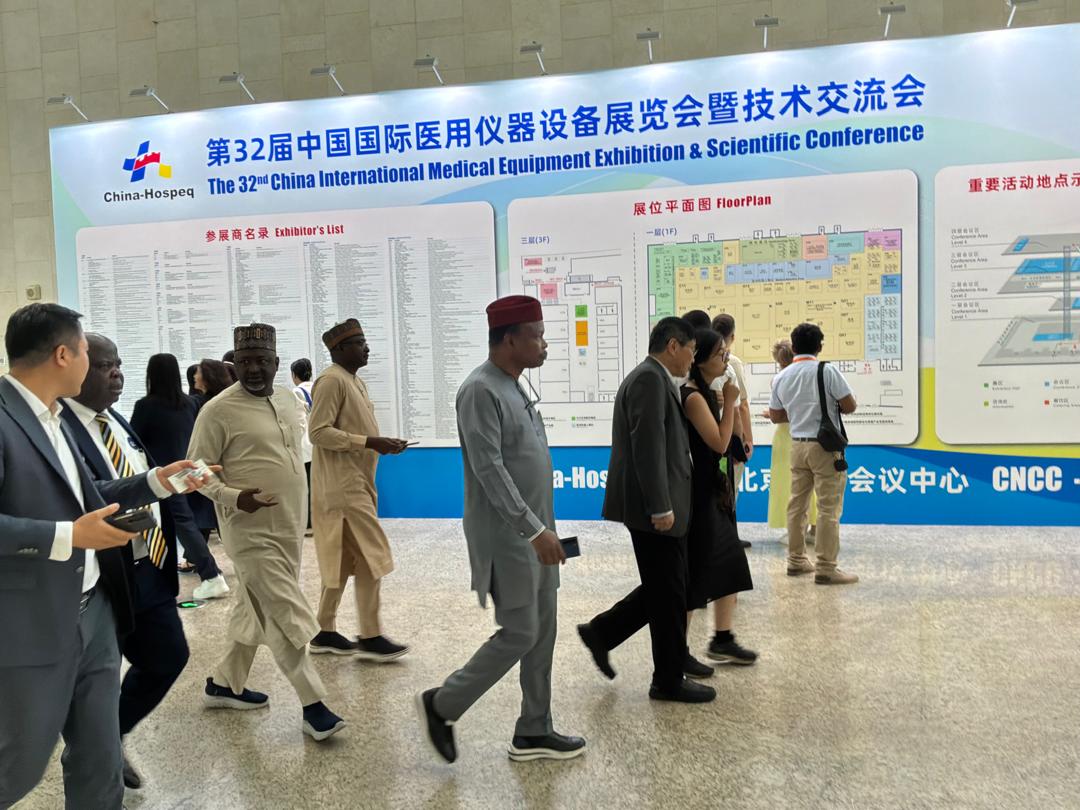
The message was delivered by the Minister of State for Health and Social Welfare, Dr. Iziaq Salako, at the ongoing China-Hospeq 2026 Conference and Medical Equipment Exhibition in Beijing, where healthcare leaders from across the globe are exploring new opportunities for collaboration.
At the heart of Nigeria's position is a simple argument: hospitals cannot function effectively on equipment alone.
According to Salako, many countries have acquired sophisticated medical technologies over the years, only to struggle with maintenance, technical support and inadequate manpower needed to keep them operational.
He said the real measure of successful health cooperation should not be the number of machines delivered but the ability of countries to independently operate, maintain and expand their healthcare systems.
"Healthcare development must go beyond procurement. What matters is whether countries have the skills, systems and institutions required to make those investments work over the long term," he said.
The minister called for a new model of China-Africa cooperation centred on building expertise, transferring knowledge and supporting local production across the healthcare value chain.
He said Nigeria was particularly interested in partnerships that would strengthen pharmaceutical manufacturing, medical technology development, diagnostics, laboratory services, digital healthcare and artificial intelligence.
Rather than depending heavily on imports, Salako said African countries should be supported to gradually develop domestic capacity to produce medicines, medical devices and other essential healthcare products.
He noted that stronger collaboration in research, innovation and workforce development would help African nations reduce vulnerabilities exposed by recent global health emergencies.
The minister described the growing relationship between Nigeria and China as a valuable platform for achieving those objectives.
According to him, cooperation between both countries has evolved significantly in recent years, creating opportunities for joint investments, specialised training programmes and institutional partnerships capable of delivering long-term benefits.

Salako also welcomed emerging initiatives designed to connect hospitals and healthcare institutions across Africa and China, saying such arrangements could produce more practical outcomes than traditional government-to-government engagements alone.
He pointed to the China-Africa Hospital Collaborative Development Initiative and the China-Africa Hospitals Alliance as examples of partnerships that could facilitate knowledge exchange, professional training and technology sharing.
The minister said Nigeria is currently implementing far-reaching reforms aimed at overhauling the country's healthcare sector under President Bola Tinubu's administration.
Those reforms, he explained, include efforts to strengthen primary healthcare services, improve access to affordable treatment, modernise diagnostic facilities and expand specialised healthcare services.
The government is also pursuing policies designed to accelerate digital transformation in the health sector while encouraging local production of medicines and medical equipment.
Salako maintained that none of these ambitions can be achieved through domestic efforts alone.
He said developing countries require strategic international partnerships capable of supporting innovation, financing infrastructure and strengthening technical capacity.
The minister further warned that emerging global health threats have become increasingly interconnected, making international cooperation more important than ever.
From future pandemics and antimicrobial resistance to climate-related health emergencies and the growing burden of non-communicable diseases, he said nations now face challenges that transcend borders.
For that reason, Salako urged participants at the Beijing conference to focus on building partnerships that outlive the event itself.
He called on governments, investors, researchers and healthcare institutions to translate discussions into concrete projects capable of improving healthcare outcomes across Africa.
As deliberations continue at China-Hospeq 2026, Nigeria's message remains clear: the future of healthcare cooperation should not be measured by the equipment shipped into Africa, but by the capacity created within Africa.

Comments (0)
No comments yet. Be the first to share your thoughts!