



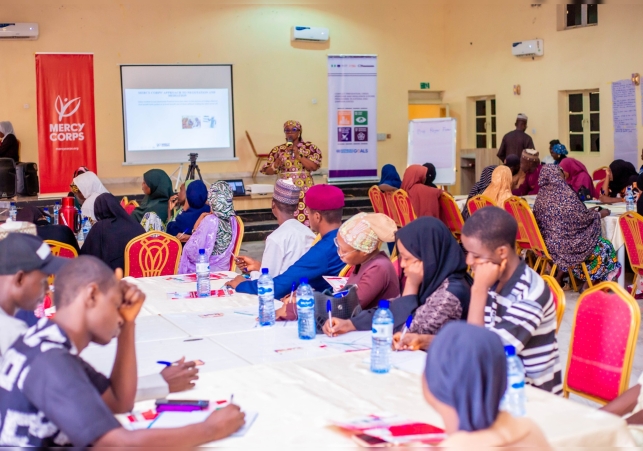
In a renewed effort to confront the persistent challenge of child malnutrition and strengthen evidence-based policymaking, the Katsina State Government has inaugurated the 2026 Standardised Monitoring and Assessment of Relief and Transitions (SMART) Nutrition Survey across the state.
The exercise, launched on Tuesday in Katsina, is expected to generate critical data that will guide government interventions, improve resource allocation and support policies aimed at enhancing the nutritional wellbeing of children, women and vulnerable households.
Speaking at the inauguration ceremony, the Statistician-General of the Katsina State Bureau of Statistics, Prof. Saifullahi Sani, described the survey as a strategic investment in the future of the state, stressing that accurate data remains the foundation of effective governance and social development.
According to him, statistics go beyond figures and percentages, serving as essential tools for governments to make informed decisions, monitor progress and evaluate the impact of public programmes.
He noted that findings from previous surveys revealed both encouraging progress and lingering challenges in the state's nutrition landscape.
Prof. Sani disclosed that the 2025 SMART Nutrition Survey recorded a Global Acute Malnutrition (GAM) prevalence rate of 7.4 per cent, while stunting stood at 46.3 per cent and underweight prevalence at 25.8 per cent among children.
He explained that the steady reduction in acute malnutrition over the past four years reflected the impact of ongoing interventions, with GAM declining from 13.5 per cent in 2022 to 9.4 per cent in 2023, rising slightly to 11.2 per cent in 2024 before dropping significantly to 7.4 per cent in 2025.
While describing the decline as a positive development, Sani warned that the persistently high rates of stunting and underweight children remained a major public health concern requiring urgent and sustained action.
He further expressed concern over child feeding practices in the state, revealing that although breastfeeding rates remain high at 97.9 per cent, exclusive breastfeeding is still low at 21.2 per cent. He added that only 28.5 per cent of children receive the minimum dietary diversity required for healthy growth and development.
The Statistician-General attributed the nutrition challenges facing many households to a combination of factors, including rising inflation, poverty, insecurity, population displacement, large family sizes, childhood illnesses and inadequate coverage of nutrition interventions.
He also highlighted the growing threat of food insecurity, revealing that approximately 73,500 residents of Katsina were classified as being in emergency food insecurity conditions between October and December 2025, with projections indicating a worsening situation during the lean season between June and August.
Despite these challenges, Sani said the state government had significantly expanded access to treatment services for acute malnutrition.
According to him, the number of Outpatient Therapeutic Programme (OTP) centres increased from 147 in 2024 to 332 in 2025, while Stabilisation Centres doubled from seven to 14 during the same period.
He disclosed that the expansion would continue in 2026, with plans to establish 406 OTP sites and 15 Stabilisation Centres covering all 34 local government areas of the state.

The intervention, he said, would be complemented by food voucher schemes, cash transfer programmes, nutritional supplementation and maternal, infant and young child nutrition initiatives designed to strengthen household resilience and improve health outcomes.
Providing details of the survey, Sani explained that the exercise would assess key indicators including wasting, stunting and underweight prevalence among children aged between zero and 59 months.
The survey will also gather information on child mortality, disease prevalence, maternal nutrition, healthcare-seeking behaviour, nutrition programme coverage and Water, Sanitation and Hygiene (WASH) indicators.
To ensure scientific accuracy and reliability, the survey will cover all 34 local government areas, grouped into seven survey domains, using a cross-sectional household survey methodology and a two-stage cluster sampling system.
He urged enumerators, supervisors and technical personnel involved in the exercise to adhere strictly to approved procedures, emphasizing that the quality of policy decisions depends largely on the credibility of the evidence generated.
Sani also called on security agencies, traditional institutions, religious leaders and community stakeholders to support the exercise by creating awareness, providing security information and encouraging households to participate fully.
In his remarks, UNICEF Planning and Monitoring Specialist, Nura Shehu, praised the Katsina State Government for demonstrating strong commitment to improving nutrition outcomes for children and women.
He stressed that timely and credible nutrition data remains indispensable for preventing, detecting and treating malnutrition, adding that the 2026 SMART Nutrition Survey would provide valuable insights for identifying vulnerable populations and targeting interventions more effectively.
Shehu particularly commended Governor Dikko Umaru Radda for prioritising data-driven governance, describing him as the first governor in Nigeria to make a dedicated budgetary allocation for a SMART Nutrition Survey.
According to him, the move reflects a clear understanding that quality data is not merely a statistical exercise but a strategic investment capable of driving better planning, accountability and measurable improvements in the lives of children and families.
He urged government agencies, development partners and communities to ensure that the findings from the survey translate into concrete actions, policies and programmes that will accelerate progress in the fight against malnutrition across Katsina State.
As field teams prepare to begin data collection, stakeholders believe the survey could provide a crucial roadmap for tackling one of the state's most pressing public health challenges and help shape a healthier future for thousands of children and families.


Comments (0)
No comments yet. Be the first to share your thoughts!