


Taibat Ummi Yakubu
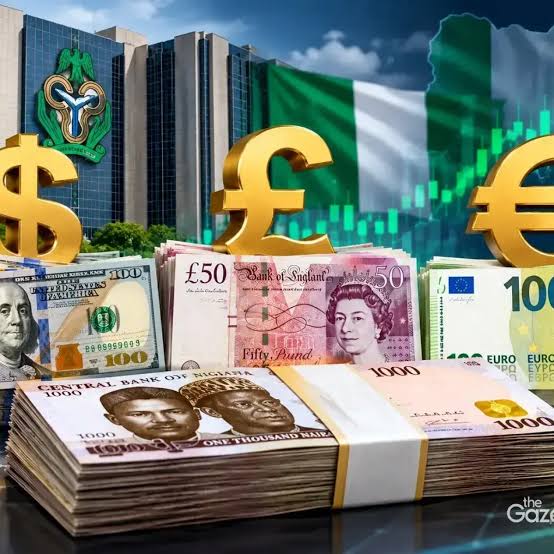
The naira has recorded another decline against the United States dollar, weakening to N1,388 at the official foreign exchange market despite a sharp increase in dollar transactions, as falling foreign exchange inflows and growing concerns over election-related spending put fresh pressure on the local currency.
The latest depreciation has raised questions about the naira's ability to maintain its recent stability, particularly as political activities ahead of the 2027 general elections gather momentum and demand for foreign currency comes under renewed pressure.
Figures published by the Central Bank of Nigeria (CBN) showed that the naira closed at N1,388 per dollar on Thursday, down from N1,379.99 recorded in the previous trading session.
The movement represents a loss of N8.01, or 0.58 per cent, within one trading day.
During the session, the exchange rate fluctuated between N1,370 and N1,397 before settling at its closing position.
Interestingly, the depreciation occurred despite a substantial rise in foreign exchange transactions. Dollar turnover increased to $800.31 million across 184 transactions on Thursday, compared with $502.88 million recorded in 148 transactions on Wednesday.
The increase represents a 59.1 per cent rise in trading volume, suggesting stronger activity in the official market. However, the additional transactions did little to prevent the naira from losing further ground against the dollar.
The pressure has also widened the difference between the official and parallel market rates. Currency dealers quoted the dollar at an average of N1,439 in the parallel market on Wednesday, while some transactions reached N1,460.
Based on Thursday's official closing rate, the difference stood at N51 per dollar using the average parallel market quotation, while the gap widened to N72 at the higher rate.
The latest decline continues a downward movement that has persisted throughout November. The naira weakened from N1,346.01 per dollar on November 2 to N1,350.45 on November 5, before closing at N1,353.50 on November 10. It subsequently fell to N1,363 on November 17 and N1,379.99 on November 18.
One of the major concerns behind the currency's recent performance is the sharp reduction in foreign exchange entering the Nigerian economy.
Research findings by Coronation Merchant Bank showed that total foreign exchange inflows dropped to $807.6 million last week from $2.48 billion recorded in the preceding week.
The decline of 67.4 per cent represents the lowest weekly inflow in at least five weeks, highlighting the pressure on dollar supply at a time when demand remains significant.
The reduction in inflows, coupled with slower growth in external reserves, has raised concerns about the country's ability to maintain adequate liquidity in the foreign exchange market.
Although the CBN has continued efforts to support dollar availability, recent market figures suggest that increased trading activity alone has not been sufficient to stabilise the local currency.
Meanwhile, Special Adviser to President Bola Tinubu on Economic Affairs, Dr Tope Fasua, has argued that the naira is undervalued and could appreciate considerably if the government sustains economic reforms, improves foreign exchange supply and attracts more productive investments.
Fasua made the observation on Thursday at the National Growth and Development Forum 2026 in Abuja, where he cited an earlier projection by the International Monetary Fund (IMF) that placed the potential exchange rate at N1,127 per dollar.
He maintained that Nigeria needed to strengthen its economic fundamentals rather than depend solely on interventions to support the currency.
"The IMF itself said about three months ago that the naira could be trading at N1,127 to the dollar. So the naira has now become undervalued," he said.
Fasua also pointed to improvements in some economic indicators, including the country's reported 4.43 per cent economic growth in the second quarter of 2026 and the decline in inflation to 14.06 per cent in October from 20.9 per cent a year earlier.
He further noted that Nigeria's external reserves had exceeded $55 billion in October, while the naira traded at N1,346 per dollar at the end of that month.
However, the country's reserves have since experienced some fluctuations. Official figures showed that gross external reserves declined from $54.76 billion to $54.71 billion as of Wednesday, following an earlier fall below the $55 billion mark on November 9.
Despite the recent movement, the reserves remain above their level at the beginning of 2026, supported partly by earnings from crude oil exports.
Fasua insisted that a stronger currency would ultimately depend on improved domestic production, increased exports and sustained economic growth.

"A stronger naira must be earned through a stronger economy. It cannot be legislated into existence," he said.
Beyond declining foreign exchange inflows, economists have also raised concerns about the possible influence of political activities on the currency market as parties and politicians intensify preparations for the 2027 elections.
Chief Executive Officer of the Centre for the Promotion of Private Enterprise, Dr Muda Yusuf, identified increased political expenditure, uncertainty surrounding economic policies and speculative demand for dollars as possible reasons for the naira's recent weakness.
Yusuf explained that political activities could generate additional demand for foreign currency, particularly cash dollars traded outside the formal banking system.
He argued that some political transactions might be conducted through informal channels because those involved could prefer to avoid the scrutiny associated with banking transactions.
"You know that political spending and demand for dollars, especially cash, are likely to be much higher, putting pressure on the parallel market," he said.
According to him, the scale of political spending could increase as the election season approaches, with the parallel market potentially bearing a significant portion of the additional demand.
Yusuf also warned that uncertainty over the future direction of Nigeria's economic reforms could influence investors' decisions, particularly foreign portfolio investors who may become reluctant to maintain their investments if they fear that existing policies could be reversed after the elections.
He noted that different political parties had expressed varying positions on the government's economic reforms, creating uncertainty about whether the policies would continue under a future administration.
Such uncertainty, he explained, could encourage capital flight and place additional pressure on foreign exchange availability.
The economist also identified speculative activities as another factor affecting the market, saying expectations of further depreciation could prompt individuals and businesses to purchase dollars in advance to protect their funds.
"People feel that the exchange rate may depreciate, and therefore they now begin to quickly buy up for speculative purposes," he said.
Nevertheless, Yusuf cautioned against concluding that the naira had entered another prolonged period of depreciation, although he acknowledged that the latest movement was concerning given the relative stability recorded in the preceding period.
Another economist, Dr Marcel Okeke, offered a different perspective, arguing that the naira's fluctuations should be examined within the context of Nigeria's managed exchange rate system.
Okeke explained that the country was no longer operating a completely floating foreign exchange regime, as the CBN continued to influence market movements through its interventions.
He also cautioned against assuming that the country's external reserves could be used entirely to defend the naira, noting that the funds serve several important economic purposes, including supporting international trade and meeting external obligations.
"External reserves have so many purposes. Because it is there, we cannot just take it and pump it into managing the exchange rate," he said.
He added that the level of a country's reserves also influences international confidence in its economy and its ability to meet financial commitments.
Okeke further observed that some exchange rate fluctuations were normal under a managed system, provided they remained within reasonable limits and did not develop into excessive volatility.
He also identified election-related spending as a potential source of additional pressure, noting that some politicians might prefer to hold foreign currency because of its perceived value and wider acceptance.
With the naira continuing to lose ground despite increased dollar transactions, the combination of declining foreign exchange inflows, political uncertainty and speculative demand has placed the currency's stability under renewed scrutiny.
While government officials maintain that stronger economic fundamentals could eventually support an appreciation, the immediate challenge remains ensuring sufficient dollar supply to meet market demand without placing excessive pressure on the country's external reserves.


Comments (0)
No comments yet. Be the first to share your thoughts!