


By Danlami Nagari Sani
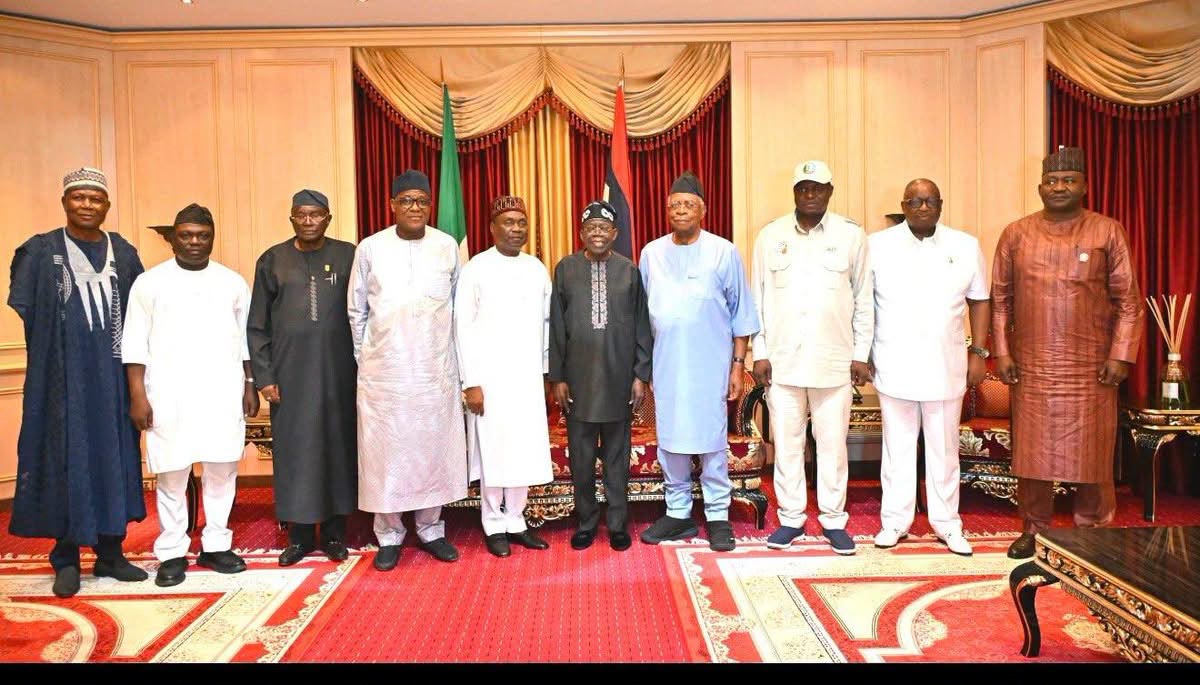
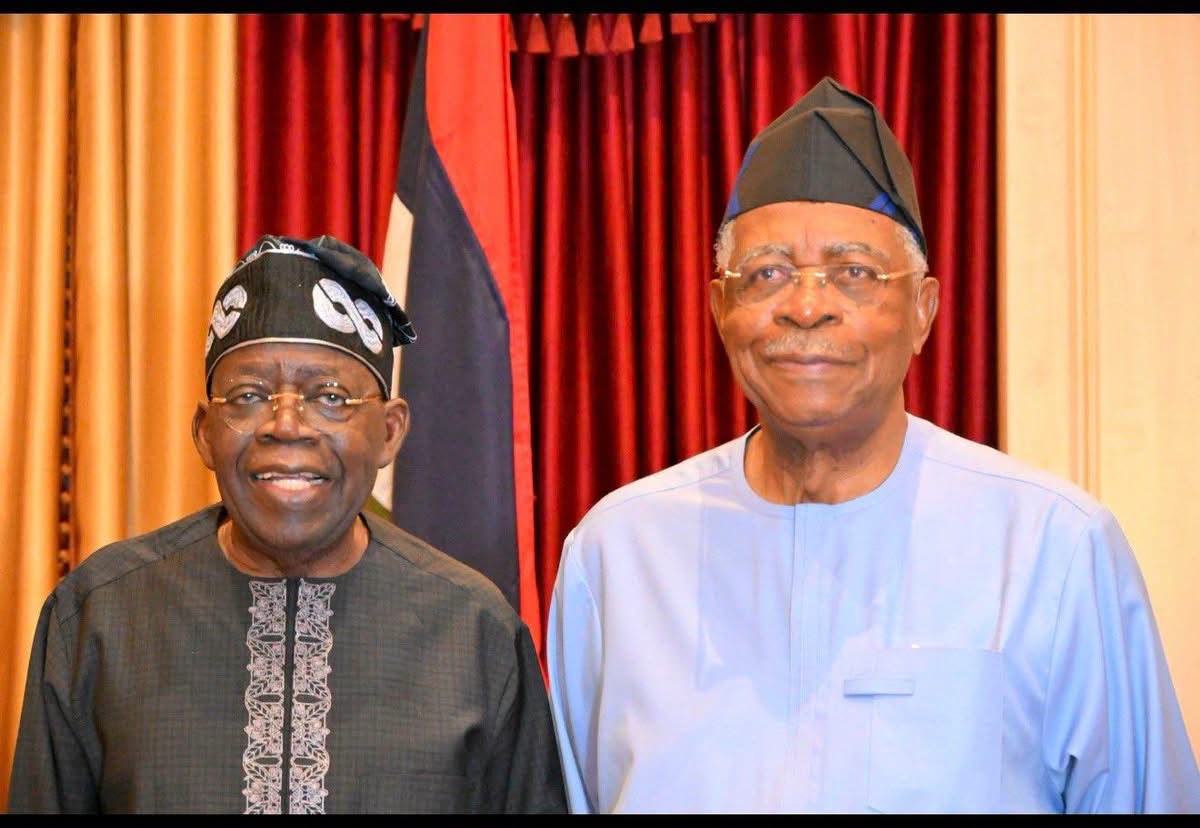
Two descriptions by separate media outlets of President Bola Ahmed Tinubu’s reported meeting with some leaders from Northern Nigeria on Thursday, November 5, 2026, have left behind a troubling picture of exclusion, political misrepresentation and an unnecessary attempt to deepen religious divisions in a region already grappling with enormous challenges.
One version of the story stated that Tinubu received a delegation of Middle Belt leaders at the Presidential Villa in Abuja. Another described the President as having met with leaders from the North-East and North-Central geopolitical zones.
Those listed as members of the delegation included the Minister of Defence, General Christopher Musa (Kaduna); Plateau State Governor, Caleb Mutfwang; Taraba State Governor, Agbu Kefas; former Chief of Army Staff, General T.Y. Danjuma (Taraba); former Speaker of the House of Representatives, Yakubu Dogara (Bauchi); and former Chief of Army Staff, General Ishaya Bamaiyi (Kebbi).
Also present were businessman Thomas Etuh (Kogi) and Dr Pogu Bitrus (Borno).
There could have been other less prominent personalities whose identities were either eclipsed by media coverage or deliberately omitted by those behind the meeting, for reasons best known to them. Nevertheless, those whose names were publicised could hardly be the only people considered eminently qualified to represent either the so-called Middle Belt or the North-Central geopolitical zone.
For instance, the Minister of Defence, Christopher Musa, is from Kaduna State in the North-West, not the Middle Belt or North-Central. The same applies to General Bamaiyi, who hails from Kebbi State, also in the North-West.
Consequently, describing the delegation as representing the Middle Belt or North-Central raises serious questions about the accuracy of the description and the criteria used in assembling its membership. It is a mischaracterisation that cannot be dismissed as a mere semantic disagreement, particularly when the composition of the delegation carries significant political and religious implications.
The more troubling dimension is that the reported composition appears to have been heavily influenced by religious considerations. If the intention was to bring together Christian leaders to express solidarity with the President, there would have been nothing inherently objectionable about such an engagement. Christians, like Muslims and members of other religious communities, have every democratic right to organise, express their political preferences and engage the government.
However, it becomes problematic when a gathering of people sharing a religious identity is presented as representing an entire geographical or socio-cultural constituency, especially when other equally qualified citizens from the same region are conspicuously excluded.
Using the six-geopolitical-zone arrangement, the North-Central comprises Benue, Kogi, Kwara, Nasarawa, Niger and Plateau states.
On the other hand, the Middle Belt is an informal, geographical and cultural transition zone stretching across the central-longitudinal corridor of Nigeria. Its framers manoeuvred their way to find a space for it between the predominantly Muslim/Hausa-Fulani North.
Over time, those who champion political, economic and social conveniences snake their way through the Christian dominated areas in Plateau, Benue, Nasarawa, Niger, Kwara, Kogi, and the Federal Capital Territory/Abuja) as well as parts of the North East and North West to include similar areas in Taraba, Adamawa, Southern Kaduna, Southern Bauchi, Southern Gombe, Southern Borno, Southern Yobe and Southern Kebbi.
In all of these places, Muslim ethnic and religious leaders, no matter their pedigree and contribution to nation building, are deliberately being excluded as part of the Middle Belt simply because of their religious identity.
Its proponents have, over the years, sought to establish a distinct identity for communities in the country's central belt.
However, the difficulty arises when the identity is defined and deployed in ways that exclude people on the basis of religion, regardless of their geographical location, ancestry, contribution to society or political standing.
The question, therefore, is whether the emerging definition is genuinely intended to promote the interests of these communities or whether it is increasingly becoming a convenient political instrument for creating religious boundaries within Northern Nigeria.
During the recent visit to Tinubu, consider the exclusion of prominent political figures who have occupied some of the most important legislative positions in the country.
How does one explain the absence of Ahmed Idris Wase, from Plateau State in the North-Central, who served as Deputy Speaker of the House of Representatives between 2019 and 2023?
Similarly, Usman Bayero Nafada, from Gombe State in the North-East, served as Deputy Speaker between 2007 and 2011. Babangida Nguroje, from Taraba State, also occupied the position between 2003 and 2007. Were these distinguished former presiding officers suddenly rendered unqualified to participate in an engagement concerning the political future of their region?
Yet, former Speaker Yakubu Dogara, a Christian from Bauchi State, was part of the delegation.
There is nothing wrong with Dogara being invited. He is an accomplished politician and former Speaker whose experience deserves recognition. The issue is the apparent double standard in the selection process. If his religious identity does not disqualify him from representing his state or contributing to a regional political conversation, why should the same opportunity be denied to equally accomplished Muslim leaders?
The same questions arise from the selection of the governors who attended the meeting. The governors of Plateau and Taraba, both Christians, were included, while their Muslim counterparts from other northern states were conspicuously absent.

What happened to Professor Babagana Umara Zulum of Borno, Mai Mala Buni of Yobe, Inuwa Yahaya of Gombe, Abdullahi Sule of Nasarawa and Usman Ododo of Kogi? All five are members of the ruling All Progressives Congress (APC), and their states fall within the geographical and political conversations surrounding the North-East and North-Central.
Were they considered irrelevant to the discussions? Were they not sufficiently qualified to speak about the security, development and political future of their respective states? Or was their religious identity an unspoken consideration?
Talking about the North-Central, where was Abdullahi Adamu from Nasarawa State, a former governor, former national chairman of the APC, former minister and elder statesman? His political experience and longstanding involvement in the affairs of the ruling party would ordinarily make him a relevant stakeholder in any serious discussion about the political direction of the region.
If the intention was to assemble a delegation beyond partisan considerations, what about former Niger State Governor Dr Mu'azu Babangida Aliyu or former Senate President Bukola Saraki from Kwara State? Both have substantial political experience and national recognition.
These are not merely questions about who was invited to a presidential meeting. They go to the heart of representation, political inclusion and the dangerous tendency to reduce the complex identity of Northern Nigeria to a contest between religious communities.
A snippet from the meeting, disclosed in a post on X by Sunday Dare, Special Adviser to the President on Media and Public Communications, indicated that the engagement was intended to demonstrate the group's disposition towards supporting Tinubu's second-term ambition.
Speaking to State House correspondents after the meeting, Dogara said the leaders had come to express solidarity with the President and explore ways of rallying support for his administration.
He specifically claimed that the Middle Belt had witnessed a significant decline in insecurity under Tinubu, citing the Abuja-Kaduna highway as evidence.
"Insecurity is declining in the Middle Belt. The Abuja-Kaduna road is safer now," Dogara said.
He added that the group discussed ways of strengthening political cooperation and mobilising support for the President within their communities ahead of the presidential election scheduled for January 16, 2027.
On his part, Governor Mutfwang said leaders in Plateau were working hard to rebuild trust and bring people together across ethnic and religious boundaries.
He observed that young people from different faiths and ethnic groups in the state were beginning to engage one another without waiting for government intervention.
"Youth leaders across the divides of faith and ethnicity are beginning to have conversations without even government support. This is quite encouraging to me that there is light at the end of the tunnel," Mutfwang said.
These are commendable sentiments. Indeed, initiatives that encourage peaceful coexistence, reconciliation and mutual understanding among communities deserve support. But there is an obvious contradiction when a meeting supposedly concerned with building bridges across religious and ethnic divides is organised in a manner that appears to reinforce those same divisions.
Those behind the meeting, including the President's hosts and political advisers, should be conscious of the potential damage such an arrangement could cause. President Tinubu, who needs broad national support to sustain his political ambition, should be particularly wary of engagements that create the impression that some citizens are more politically acceptable than others because of their religious affiliations.
Democracy thrives on inclusion, competing ideas, accountability and the freedom of citizens to make political choices without intimidation or sentiment.
Northern Nigeria, in particular, cannot afford this kind of divisive politics. The region is confronted by a daunting combination of insecurity, widespread poverty, educational deprivation, unemployment, inadequate infrastructure and weak economic opportunities.
The 2026 INEC figures indicate that the combined number of registered voters in the 19 northern states and the Federal Capital Territory stands at 56,014,673. These voters comprise Muslims and Christians, as well as citizens of different ethnic and cultural backgrounds. They are an enormous political constituency whose collective interests cannot be represented by a carefully selected religious grouping.
President Tinubu needs votes across these divides.
The people driving this emerging political arrangement should also reflect on the long-term consequences of the divisions they may be encouraging. Political alliances built primarily around religious sentiment may deliver temporary electoral advantages, but they rarely provide durable solutions to the structural problems confronting society.
There is, therefore, a need for sober reflection, political maturity and a reconsideration of the methods being employed.
Those behind the emerging political map must not allow resentment, religious sentiment or the pursuit of short-term political relevance to imprison them in a self-defeating narrative. Northern Nigeria has more in common than the divisions being presented to it.We are far better together as Northern Nigeria.
Sani sent this piece from Wukari, Taraba State
Comments (0)
No comments yet. Be the first to share your thoughts!