


BY TAIBAT UMMI YAKUBU
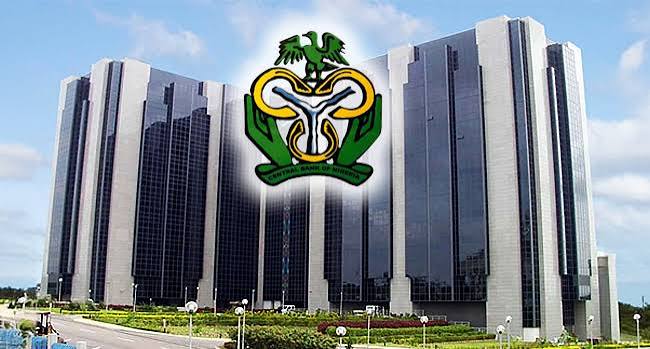
Economic experts, financial analysts and industry stakeholders have backed the Central Bank of Nigeria’s latest interest rate adjustment, describing it as a carefully calculated move aimed at strengthening monetary policy without abandoning the fight against inflation.
The endorsement follows the decision of the Central Bank’s Monetary Policy Committee (MPC) at its 307th meeting held on September 21 and 22, where members approved a reset of the Monetary Policy Rate (MPR) from 26.5 per cent to 23 per cent. While the reduction attracted widespread attention, the apex bank insisted that the action should not be mistaken for a relaxation of its monetary tightening strategy.
CBN Governor Olayemi Cardoso explained that the move was part of a broader operational realignment designed to improve how monetary policy decisions influence financial markets and the wider economy. Alongside the benchmark rate adjustment, the MPC recalibrated the Standing Facilities Corridor to +50 and -300 basis points around the MPR while retaining the Cash Reserve Requirement at 45 per cent for Deposit Money Banks, 16 per cent for Merchant Banks and 75 per cent for non-TSA public sector deposits.
According to the Committee, the decision became necessary after a growing disconnect between the benchmark lending rate and prevailing market rates began weakening the effectiveness of monetary policy signals. Members noted that recent reforms within the financial system, including the introduction of the Nigerian Overnight Funding Rate (NOFR), have improved transparency and market efficiency, creating the right conditions for the adjustment.
The MPC pointed to encouraging inflation data as one of the key factors behind its confidence. Headline inflation slowed to 15.39 per cent in August 2026 from 15.43 per cent in July, while food inflation dropped more significantly from 20.31 per cent to 19.57 per cent. Lower prices of key food items such as vegetables, palm oil and meat contributed to the decline. Core inflation also eased sharply, falling to 13.29 per cent from 14.97 per cent as transportation and healthcare costs moderated.
On a monthly basis, inflation showed even stronger signs of easing, with headline inflation slowing to 0.71 per cent in August compared to 1.57 per cent in July. The Committee attributed the trend to the cumulative impact of previous monetary tightening measures, improved exchange rate stability and stronger public confidence in the inflation outlook.
Beyond inflation, the MPC highlighted signs of broader economic recovery. Nigeria’s Gross Domestic Product expanded by 4.43 per cent in the second quarter of 2026, an improvement from the 3.89 per cent recorded in the first quarter. Growth was driven by both the oil and non-oil sectors, reflecting a more balanced economic expansion.
The non-oil economy grew by 4.31 per cent, supported by robust performance in information and communications technology, agriculture, real estate, livestock production, trade and financial services. Meanwhile, the oil sector recorded a remarkable rebound, growing by 7.31 per cent as crude production increased and fresh investments flowed into the industry.
Business confidence also strengthened during the period. The Composite Purchasing Managers’ Index rose to 52.7 points in August from 51.1 in July, indicating continued expansion across key sectors of the economy.

Nigeria’s external position showed further improvement, providing additional support for the MPC’s decision. The country recorded a balance of payments surplus of $3.51 billion in the second quarter of 2026, up from $2.38 billion in the previous quarter. The current account surplus also surged to $7.54 billion, representing a significant increase from $4.49 billion recorded earlier in the year.
Gross external reserves climbed to $55.25 billion as of September 18, the highest level recorded in nearly two decades. The reserve stock is considered sufficient to cover more than 11 months of imports, providing a strong buffer against external shocks and boosting investor confidence.
The Committee also identified government initiatives that could help sustain the downward trend in inflation. Among them is the Presidential National Affordable CNG Transit Programme, which is expected to lower transportation costs and reduce pressure on consumer prices. Another development welcomed by the MPC is the new fiscal-monetary coordination agreement between the Federal Ministry of Finance and the Central Bank, aimed at aligning government spending and monetary policies to achieve stable prices and long-term economic growth.
The successful completion of the banking sector recapitalisation programme was also cited as a positive development. According to the Committee, stronger capital positions have improved banks’ resilience and enhanced their ability to support large-scale investments in critical sectors of the economy.
Looking ahead, the MPC expressed confidence that economic growth will remain strong through the remainder of 2026, supported by higher crude oil output, improved agricultural production and sustained business activity. Inflation is also expected to continue moderating as food supplies improve during the harvest season and foreign exchange stability is maintained.
However, policymakers warned that risks remain. They pointed to ongoing geopolitical tensions in the Middle East and increased election-related spending as factors that could trigger fresh inflationary pressures in the months ahead.
Cardoso reiterated that the rate adjustment should not be viewed as a policy reversal but as a strategic effort to improve the effectiveness of monetary policy. He stressed that foreign exchange pressures have eased considerably while investor confidence continues to strengthen.
The CBN governor also highlighted a sharp rise in diaspora remittances as evidence that recent reforms are yielding results. Monthly inflows, he said, have increased from about $200 million before the reforms to nearly $1 billion by July 2026. Measures such as expanded access to Bank Verification Numbers for Nigerians abroad, tighter oversight of international money transfer operators and dedicated settlement accounts have helped drive the increase.
With inflation easing, reserves rising and economic growth gathering pace, analysts say the latest CBN adjustment signals growing confidence in the economy's recovery while keeping the fight against inflation firmly on track.



Comments (0)
No comments yet. Be the first to share your thoughts!