


BY TAIBAT UMMI YAKUBU
On September 23, 1987, a new state appeared on Nigeria’s political map.
It was called Katsina.
But Katsina was hardly new.
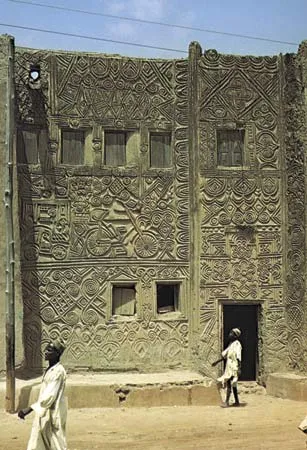
Long before the state was carved out of the old Kaduna State by the military administration of General Ibrahim Badamasi Babangida, the name Katsina was already deeply rooted in the history of Hausaland. The territory brought together two of the region’s historic centres — the ancient Katsina and Daura kingdoms — places whose stories stretch back centuries before the creation of modern Nigeria.
So, as Katsina marks 39 years as a state, the anniversary is not simply about counting the years since 1987. It is an opportunity to look backwards at where the people came from, how the state was created, the leaders who have governed it and the many chapters that have shaped the Katsina of today.
Before There Was a Katsina State
The history of present-day Katsina reaches far beyond the boundaries of the modern state.
Katsina was one of the ancient Hausa centres that grew around commerce, scholarship, agriculture and Islamic civilisation. Daura, meanwhile, occupies an equally important place in Hausa historical tradition and is widely associated with the origins of the Hausa states.
For centuries, Katsina developed into an important centre of trans-Saharan trade and Islamic learning. Scholars travelled to and from the area, while traders moved goods across the wider West African region.
The city also produced a tradition of scholarship that would become one of the most enduring features of its identity.
The arrival and spread of Islam transformed intellectual life in the region, with Quranic education, Arabic scholarship and Islamic jurisprudence becoming important parts of society.
Katsina’s historical importance was therefore not created by colonial administration or the Nigerian state. The modern political state inherited a much older civilisation.
The region eventually came under the influence of the Sokoto Caliphate following the 19th-century jihad led in Katsina by Umaru Dallaji. The political and religious changes of that period further shaped the emirate institutions and social structures that survived into the colonial era.
From Colonial Rule to Kaduna State
British colonial rule later reorganised the traditional political landscape into an administrative system designed around the needs of the colonial government.
Katsina and Daura continued to retain their traditional importance, but their political boundaries were increasingly determined by colonial and post-colonial administrative arrangements.
At independence in 1960, Nigeria inherited a regional structure. Subsequent military governments repeatedly reorganised the country in an attempt to bring administration closer to the people and reduce the size of existing political units.
In 1967, the military government created 12 states from Nigeria’s four regions. The area that would eventually become Katsina State formed part of the North-Central State.
When additional states were created in 1976, North-Central State was renamed Kaduna State.
For more than a decade, Katsina and Daura existed within Kaduna State as local government areas.
Then came September 23, 1987.
The Day Katsina Became a State
General Ibrahim Babangida’s military administration announced the creation of Katsina State from part of the old Kaduna State.
The decision changed the political destiny of the area.
Katsina became the state capital, while the new state inherited a population spread across communities with deep agricultural, commercial, cultural and religious traditions.
The new state also came with enormous expectations.
A separate state meant a new bureaucracy, new institutions, new political leadership, new infrastructure and, perhaps most importantly, the possibility of bringing government closer to the people.
The first man given the responsibility of steering the new state was Colonel Abdullahi Sarki Mukhtar.
He became the first military governor of Katsina State in September 1987.
His tenure was brief, lasting less than a year, but his place in the state’s history is permanent: he was the first person to occupy the seat created by the birth of Katsina State.
The Early Years: Military Administrators Come and Go
After Sarki Mukhtar came Colonel Lawrence Onoja, who governed from 1988 to 1989.
He was followed by John Madaki, who served from December 1989 until January 1992.
These early years were dominated by military rule, and Katsina, like other Nigerian states, operated within the wider political uncertainty of successive military administrations at the federal level.
Then came an important transition.
In January 1992, Alhaji Sa'idu Barda became the first civilian governor of Katsina State.
Barda's administration belonged to the short-lived return to democratic rule under the Babangida transition programme. He governed until November 1993, when another military intervention ended the civilian experiment.
Katsina once again returned to military administration.
Another Chapter of Military Rule
Following the collapse of the Third Republic, Emmanuel Acholonu became military administrator of Katsina State in December 1993.
He remained in office until August 1996.
He was succeeded by Samaila Bature Chamah, who administered the state from August 1996 to 1998.
Then came Colonel Joseph Akaagerger, the final military administrator of Katsina State.
His tenure lasted from 1998 until May 1999.
For Katsina, as for Nigeria, May 1999 marked a historic turning point.
Military rule was giving way to a new democratic era.
And with democracy came a man whose political journey would eventually take him from Katsina Government House to Nigeria’s highest office.
Umaru Musa Yar’Adua: The Governor Who Became President
On May 29, 1999, Umaru Musa Yar'Adua became the second civilian governor of Katsina State.
His eight-year tenure became one of the most consequential chapters in the state's political history.
Yar'Adua's administration became associated with a style of governance that emphasised public institutions, education, infrastructure and accountability. His political career did not end at the Katsina Government House.
In 2007, after two terms as governor, Yar'Adua was elected President of Nigeria.
He became the first governor of Katsina State to rise to the presidency.
His emergence gave Katsina a new place in Nigeria's political consciousness.
The man who had governed the state from 1999 to 2007 was suddenly leading the entire country.
Although his presidency was cut short by illness and death in 2010, his name remains permanently connected to both Katsina's political history and Nigeria's democratic development.
Ibrahim Shehu Shema and the Continuity of Democracy
Yar'Adua was succeeded in 2007 by Ibrahim Shehu Shema, who governed Katsina for eight years.
Shema inherited a state that had already undergone a significant transformation since the return of democracy.
His administration continued with investments and programmes in infrastructure, education, agriculture and other sectors while Katsina's population and urban centres continued to expand.

By the time Shema left office in 2015, Katsina had completed 28 years as a state and had experienced an extraordinary succession of military administrators and elected civilian governments.
But another political chapter was about to begin.
Aminu Masari and the APC Era
In 2015, Aminu Bello Masari became governor of Katsina State on the platform of the All Progressives Congress.
His victory marked the first time an opposition party took control of Katsina's Government House since the return to democracy.
Masari served two terms, from 2015 to 2023.
His eight-year tenure coincided with major national political and economic changes, including the rise of the APC at the federal level and the transition from Muhammadu Buhari's presidency to Bola Tinubu's administration.
Under Masari, Katsina continued to pursue projects in education, healthcare, roads, water supply, agriculture and other areas, while security increasingly became one of the defining challenges facing the state.
The rise of banditry across parts of north-western Nigeria changed everyday life in many communities.
Villages that had traditionally depended on farming and livestock increasingly faced attacks, displacement and disruption of economic activity.
Security became not merely a political issue but a question of survival and livelihoods.
Dikko Radda: The Current Chapter
On May 29, 2023, Dikko Umar Radda became governor of Katsina State.
His emergence marked the beginning of another chapter in the state's political history.
Radda came into office at a time when Katsina was confronting a combination of security challenges, economic pressure, unemployment, infrastructure needs and demands for greater investment in agriculture and human capital.
His administration introduced the “Building Your Future” agenda, with emphasis on areas including education, healthcare, agriculture, infrastructure, youth development and economic empowerment.
But like his predecessors, Radda has had to govern a state whose challenges are constantly changing.
Katsina's population has grown. Its towns have expanded. Agriculture remains central to the economy, while young people increasingly demand education, technology, employment and opportunities beyond traditional occupations.
At the same time, insecurity has become one of the most difficult issues facing communities across parts of the state.
The state has therefore entered its 39th year carrying both the weight of its past and the demands of a rapidly changing future.
Thirty-Nine Years, Eleven Leaders
From its creation in 1987 to today, Katsina has passed through the hands of 11 governors and military administrators.
They are:
Abdullahi Sarki Mukhtar — 1987–1988
Lawrence Onoja — 1988–1989
John Madaki — 1989–1992
Sa'idu Barda — 1992–1993
Emmanuel Acholonu — 1993–1996
Samaila Bature Chamah — 1996–1998
Joseph Akaagerger — 1998–1999
Umaru Musa Yar'Adua — 1999–2007
Ibrahim Shehu Shema — 2007–2015
Aminu Bello Masari — 2015–2023
Dikko Umar Radda — 2023–present
Each administration arrived with its own priorities, political circumstances and expectations.
Some served during military rule. Others governed during democratic transitions. One became President of Nigeria. Together, they form the political timeline of modern Katsina State.
But the history of Katsina cannot be reduced to the people who occupied Government House.
The Katsina Beyond Government House
The real story of Katsina is also found in its farmers, traders, teachers, artisans, civil servants, religious scholars, traditional rulers, students, entrepreneurs and families.
It is found in the old walls of Katsina.
It is found in the Gobarau Minaret, standing as a reminder of the city's centuries-old Islamic scholarly tradition.
It is found in Daura, a city whose name carries enormous weight in Hausa history.
It is found in Funtua's commercial activity, Malumfashi's agricultural communities, Dutsin-Ma's expanding urban landscape, Kankara's history, Jibia's border economy, the communities of Bakori, Dandume, Faskari, Batsari, Safana, Kaita and the many other towns and villages that make up the state.
Katsina is also a state of traditional institutions.
The Katsina Emirate and Daura Emirate remain important custodians of history and culture, while traditional rulers continue to play roles in community leadership and social affairs.
The state has produced scholars, soldiers, politicians, judges, academics, businessmen, writers and public servants who have contributed far beyond its borders.
Perhaps no political story illustrates that reach more clearly than that of Umaru Musa Yar'Adua, who travelled from Katsina Government House to Aso Rock.
The State at 39
Thirty-nine years after its creation, Katsina is considerably different from the state that emerged in 1987.
Its population has expanded. Its towns have grown. Its roads, institutions and educational establishments have multiplied. Its economy has evolved, even though agriculture remains fundamental to the livelihoods of millions.
But the anniversary also invites uncomfortable questions.
Has Katsina fully converted its enormous agricultural potential into prosperity?
Has its educational tradition produced enough opportunities for its young population?
Can insecurity be brought under control sufficiently for farmers to return confidently to their fields?
Can the state's historical cities become major centres of tourism and cultural economy?
Can its abundant human resources be matched by equally strong institutions?
And perhaps the biggest question: what should Katsina look like when it reaches 50?
Those questions cannot be answered by one administration or one political party.
The history of the state shows that governments change, political parties change and priorities change — but Katsina remains.
From 1987 to the Future
Katsina's 39-year journey began with the stroke of a pen that separated it from Kaduna State.
But the story itself began centuries earlier.
It began with ancient settlements, kingdoms, scholars and traders. It passed through the era of Islamic scholarship and the Sokoto Caliphate. It survived colonial reorganisation, regional governments and repeated state restructuring. It entered the modern Nigerian federation in 1987 and has since experienced military administrators, civilian governors, political transitions and democratic continuity.
Today, Katsina stands at another point in its long history.
The generation that witnessed its creation is now watching its children and grandchildren shape the next chapter.
The question is no longer why Katsina was created.
The question is what its people will make of the opportunity that creation gave them.
Thirty-nine years after September 23, 1987, Katsina is no longer simply a new state carved out of Kaduna.
It is a political identity, a cultural inheritance and a historical society still being written — one generation, one community and one decision at a time.
And as the state moves towards its 40th year, its greatest story may yet be the one that has not been written.
.jpg)
Comments (0)
No comments yet. Be the first to share your thoughts!