


BY TAIBAT UMMI YAKUBU
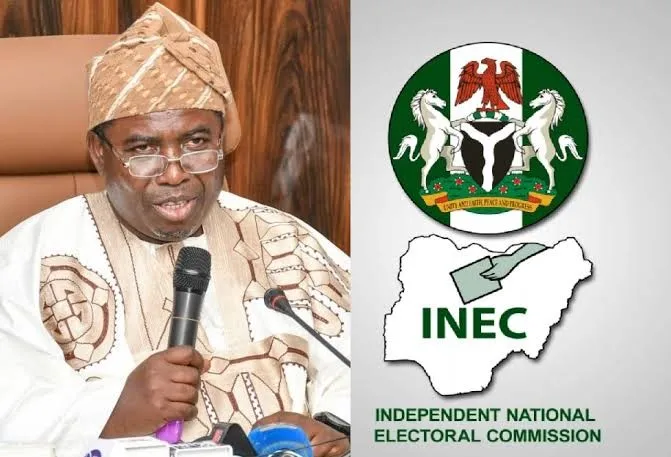
The Independent National Electoral Commission (INEC) has introduced fresh technological safeguards designed to stop inaccurate election results and figures suggesting over-voting from being uploaded to its Result Viewing Portal (IReV) ahead of the 2027 general elections.
INEC Chairman, Prof. Joash Amupitan, said the new system would detect questionable results at the polling-unit level and prevent them from appearing on the public portal, in what he described as a major step towards strengthening the credibility of future elections.
Amupitan disclosed this during a high-level dialogue organised by Chatham House in partnership with the Kimpact Development Initiative (KDI), under the theme, “Nigeria’s 2027 Elections: Democratic Trajectory and Regional Stability Beyond the Ballot.”
According to him, the commission has developed technical measures that would ensure results containing inaccuracies are identified before transmission, rather than allowing questionable figures to enter the public viewing system.
“We have now devised a technical safeguard: if a result is not accurate at the polling unit, it will not go to IReV at all,” he said.
The INEC chairman explained that the commission's review of the 2023 general elections revealed that some of the most serious weaknesses in election result management occurred during the collation process rather than at polling units.
“We found that the core problem of election result management and declaration in Nigeria is not even at the polling unit—it is at the collation centres,” he said.
He added that INEC was working to eliminate discrepancies between figures recorded at polling units and those presented at collation centres to prevent manipulation and improve confidence in the final results.
As part of preparations for the 2027 elections, Amupitan announced that the commission would conduct a nationwide mock accreditation and voting exercise on November 28, 2026.
The exercise, which will cover all states of the federation, is expected to simulate the presidential election and test the effectiveness of the commission's accreditation and electronic result transmission systems.
“On the 28th of this month, we will conduct a mock accreditation and voting exercise across all states of the federation to simulate the presidential election and verify that we have gotten both accreditation and electronic result transmission right,” he said.
Amupitan disclosed that INEC had initially considered introducing an entirely new election technology for the 2027 polls but eventually opted to improve its existing infrastructure because of the limited time available before the elections.
He also addressed concerns over the malfunctioning of the Bimodal Voter Accreditation System (BVAS) during the 2023 elections, particularly in locations where extreme temperatures and poor storage conditions affected the devices.
He said the commission was constructing climate-controlled storage facilities across the states and the Federal Capital Territory to protect its technological equipment from environmental damage.
The chairman further revealed that INEC had purchased additional BVAS machines and reduced the maximum number of registered voters assigned to each device from 1,250 to 850.
Under the revised arrangement, polling units with more than 850 registered voters will receive additional machines to reduce pressure on the devices and ensure voters are accredited without unnecessary delays.

Reflecting on the controversies surrounding the 2023 presidential election, Amupitan admitted that the experience had significantly damaged public confidence in INEC, leaving the commission with a major credibility challenge.
“First and foremost, let me speak about what happened in 2023, which resulted in a significant trust deficit for INEC—damage so large that the Commission has not yet fully recovered from it,” he said.
However, he appealed to Nigerians to give his leadership an opportunity to rebuild confidence in the electoral body, pointing to improvements recorded in recent off-cycle elections.
He cited the governorship elections in Anambra, Osun and Ekiti states, the Federal Capital Territory Area Council elections and 16 legislative by-elections as examples of the commission's recent electoral activities.
According to him, the recent governorship elections in Anambra and Osun reflected improvements in INEC's administrative operations, particularly in the timely declaration of results, which were announced the day after voting.
On preparations for the 2027 general elections, the chairman disclosed that INEC had received a substantial portion of its approved budget but was still awaiting the release of the outstanding funds.
He said the commission had received assurances that the remaining allocation, including money required for the recruitment and welfare of temporary election workers, would be released before the end of November.
Amupitan also addressed allegations questioning his political neutrality following claims circulating on social media that his telephone number was linked to a controversial account on X.
He denied operating an X account, revealing that an independent forensic examination had been obtained and the matter referred to the Department of State Services (DSS) and the Inspector-General of Police for investigation.
The INEC chairman equally dismissed suggestions that his previous involvement in politically sensitive court cases as a lawyer could affect his impartiality, insisting that he had only represented clients in his professional capacity before becoming chairman of the commission.
“My loyalty is solely to the Constitution of the Federal Republic of Nigeria and the Electoral Act,” he declared.
On allegations of irregularities in the voters' register, including claims that the number of registered voters in a particular ward in Ebonyi State had increased by 85 per cent, Amupitan said the commission investigated the complaint and addressed it in accordance with established legal procedures.
He urged Nigerians, especially young people, to remain actively involved in the country's democratic process, warning against the spread of misinformation capable of undermining public confidence in elections.
“This country belongs to young Nigerians, and they must not relent in working for the Nigeria they desire,” he said.
With the 2027 general elections approaching, INEC's proposed technological improvements, particularly its plans to prevent inaccurate figures from reaching IReV, will face close public scrutiny as Nigerians look for stronger safeguards against the electoral controversies that followed the 2023 polls.
Comments (0)
No comments yet. Be the first to share your thoughts!