


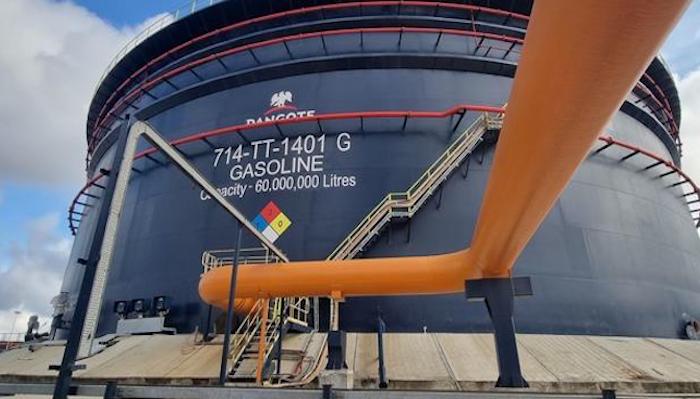
Millions of Nigerians could soon begin to feel the impact of lower fuel distribution costs as Dangote Petroleum Refinery and Petrochemicals expands its free petroleum products delivery programme to four additional states, a move industry stakeholders believe could ultimately translate into cheaper petrol prices at filling stations across the country.
The refinery has extended the initiative to Kano, Imo, Anambra and Nasarawa states, adding to Lagos, Ogun, Rivers, Kaduna, Delta and the Federal Capital Territory, where the programme had already been introduced. The expansion represents another significant step in Dangote Refinery’s growing influence on Nigeria’s downstream petroleum sector and its efforts to address one of the most persistent challenges in fuel distribution—transportation costs.
For years, independent petroleum marketers have been responsible for transporting products from refineries and depots to their retail outlets. This process often comes with substantial expenses, including haulage charges, vehicle maintenance, insurance, logistics and other operational costs. In most cases, these costs are eventually transferred to consumers through higher pump prices.
Dangote Refinery is now attempting to change that narrative by absorbing the cost of delivering petroleum products directly to marketers. By taking over a major component of the distribution process, the refinery aims to reduce the financial burden on marketers while creating opportunities for savings to be passed on to consumers.
Announcing the expansion of the programme, the Group Executive Director for Commercial Operations, Oil and Gas, WAEP and Fertiliser at Dangote Industries, Fatima Aliko-Dangote, explained that the initiative was designed to ensure that the benefits of domestic refining extend beyond production and reach businesses and consumers alike.
According to her, the true value of local refining should not be measured solely by the volume of fuel produced but by the impact it has on the lives of ordinary Nigerians. She noted that removing distribution costs from the supply chain creates room for savings and promotes greater efficiency across the petroleum sector.
The initiative has already received strong support from the Independent Petroleum Marketers Association of Nigeria (IPMAN), which views the programme as a major relief for marketers who have long struggled with logistical challenges and financial constraints.
IPMAN’s National Publicity Secretary and Public Relations Officer, Chinedu Ukadike, said the arrangement addresses one of the most frustrating realities of the petroleum business, where marketers often pay for products but wait for extended periods before receiving them. Such delays frequently tie down capital, affect cash flow and increase operational pressures on businesses.
According to him, Dangote’s delivery arrangement significantly reduces these challenges by ensuring products are delivered closer to marketers, allowing them to focus on business growth rather than transportation concerns.
Ukadike observed that the initiative would not only benefit marketers but could also have a direct impact on consumers. Transportation remains a major factor in determining the final retail price of petrol, and reducing that cost creates an opportunity for marketers to lower pump prices.
For consumers already grappling with rising living costs, any reduction in fuel prices could provide much-needed relief. Since petrol prices often influence transportation fares, food prices and the cost of doing business, even modest reductions can have wider economic implications.
The programme is particularly significant for marketers operating in locations far from major fuel depots and distribution centres. Under traditional supply arrangements, transporting products over long distances increases costs through haulage expenses, road risks, vehicle wear and tear, insurance premiums and other logistical challenges.
By bringing products closer to destination markets, Dangote Refinery is effectively shortening the supply chain and reducing many of the risks associated with long-distance transportation. This not only improves efficiency but also enhances the reliability of product supply across various regions of the country.
Industry observers believe the initiative reflects the changing dynamics of Nigeria’s deregulated petroleum market. Competition among suppliers is increasingly encouraging innovation and customer-focused solutions, with companies seeking new ways to attract and retain customers.
Ukadike described the development as a practical demonstration of the benefits of deregulation and healthy competition, noting that consumers ultimately stand to gain when companies compete to offer better services and lower costs.
He also urged the refinery to expand the programme to more locations, particularly in northern Nigeria, where transportation costs often contribute significantly to higher fuel prices.
The latest expansion comes at a time when Dangote Refinery continues to strengthen its role in both domestic and international petroleum markets. With a refining capacity of 700,000 barrels per day, the facility has emerged as a major supplier of refined petroleum products and is increasingly shaping conversations around energy security, local refining and fuel pricing in Nigeria.
While the full impact of the free delivery initiative may take time to become evident, many stakeholders are optimistic about its potential. Beyond increasing domestic fuel supply, the refinery is now actively addressing one of the major structural costs within the distribution network.
For millions of motorists, businesses and households across Nigeria, the expectation is straightforward. If the cost of moving fuel from the refinery to retail outlets continues to decline, the possibility of lower pump prices becomes more realistic.
As the country's petroleum sector evolves, initiatives such as this may play an important role in determining how quickly the benefits of domestic refining reach ordinary Nigerians. Whether through lower transportation costs, improved supply efficiency or more competitive fuel prices, the expansion of Dangote’s free delivery programme is increasingly being seen as a development with the potential to reshape the economics of fuel distribution in Nigeria.


Comments (0)
No comments yet. Be the first to share your thoughts!